



Blog
Common Mistakes to Avoid Before Ordering a 3D Printed Part

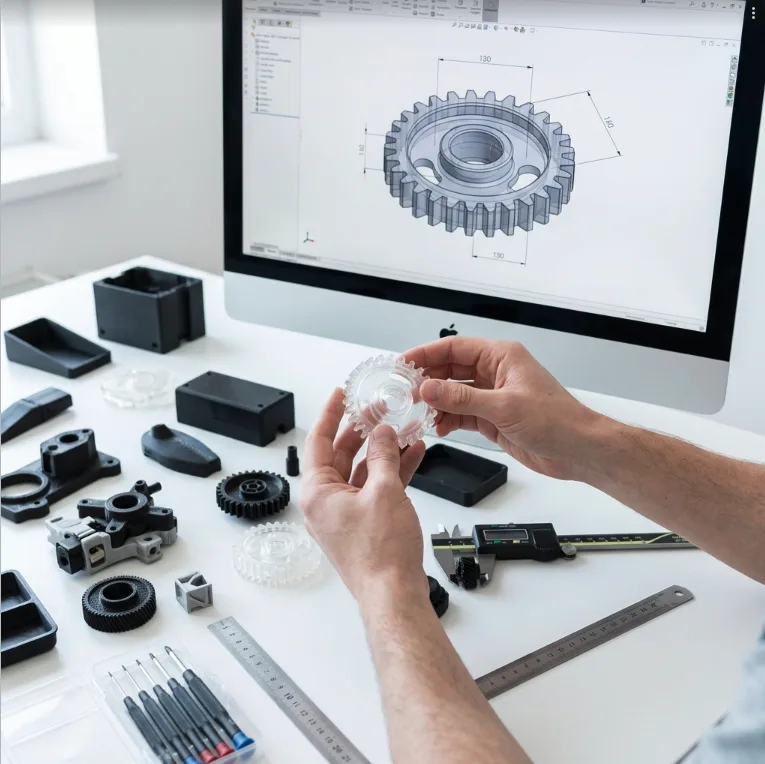
Ordering a 3D printed part should be straightforward, but issues like poor fit, weak durability, or an unsatisfactory finish are more common than expected. In most cases, these problems stem from decisions made before printing begins, such as material selection, design, or file preparation. Understanding these common mistakes can help you achieve better results while saving time and cost.
Picking Material Purely on Price
This is one of the most common mistakes. Someone compares two quotes, goes with the cheaper filament, and only later realises it can’t handle the job.
PLA works fine for models and low-stress applications, but it softens quickly under heat. ABS tolerates warmer environments but tends to warp if the print settings aren’t dialed in correctly. Nylon and other engineering plastics hold up under real mechanical load, though you’ll pay more for them. Resin captures fine detail beautifully, making it ideal for highly detailed prototypes. However, it is generally more brittle than most thermoplastics.
Ask yourself where the part will actually be used. A display prototype has very different requirements from a functional part used every day. This is exactly the kind of discussion a reliable 3D printing service should have before recommending a material.
Designing Without Printing in Mind
A model that looks flawless in CAD software can still fail badly once it’s printed. Thin walls buckle. Overhangs sag or need heavy support. Sharp internal corners become weak points that crack under stress.
Watch out for:
- Wall thickness that’s thinner than what your material can realistically hold
- Overhangs steeper than 45 degrees without planned support
- Tight-fitting features that don’t leave room for shrinkage
- Sharp corners where stress tends to concentrate
New to this? Have someone review your file before printing. A quick check can save you from a failed print—or worse, one that breaks the first time you use it.
Sending Files Without Checking Them First
People export a file straight from CAD and hit send without a second look. That’s usually when problems like inverted normals, gaps in the mesh, or wrong scaling slip through unnoticed.
Before your file goes anywhere, it’s worth checking that the units are correct (mm and inches get mixed up more often than you’d think), the walls are consistent, the geometry is fully closed, and the file format actually matches what your printing partner needs. None of this takes long, but skipping it can cost you an entire print cycle.
Forgetting About Shrinkage and Tolerances
If your part has to fit with something else, a housing, a bracket, another printed piece, tolerances aren’t optional details. Plastic shrinks slightly as it cools, and different materials shrink by different amounts.
A lot of people assume a part will just slot into place. Then it doesn’t, and they’re left sanding or reprinting. Talk through your tolerance requirements with your supplier before printing starts, especially if the part needs to snap, slide, or bolt together with anything else.
Defaulting to Whatever Technology Is Available
FDM, and SLA aren’t interchangeable, even though people often treat them that way. FDM is budget-friendly and solid for functional prototypes. SLA gives you smoother surfaces and sharper detail, which suits models or small intricate parts.
Using the wrong process for your part usually means paying extra for capability you didn’t need, or ending up with something that doesn’t perform the way you expected.
Treating Post-Processing as an Afterthought
Very few parts come off the printer ready to use straight away. Support removal, sanding, curing, painting, all of it takes time. If you need a specific finish, say so early. Bringing it up after the print is already done almost always means delays and added cost.
Not Explaining What the Part Is For
This sounds obvious, but it gets skipped constantly. If your printing partner doesn’t know whether you need a display piece, a working prototype, or a final production part, they’re guessing at material, process, and finish. Spell out the end use clearly from the start and you’ll cut down on revisions considerably.
Finding a Partner Who Actually Asks Questions
Steering clear of these mistakes gets a lot easier once you’re working with people who understand design, not just machine operation. Among the many 3D printing services in India competing for attention right now, look for one that actually reviews your files and tells you honestly what will and won’t work, instead of just running whatever you send them.
At Dwart Industries, every job starts with a conversation about what the part actually needs to do. Material, process, finish, all of it gets worked out before printing begins, not fixed afterward.
Before You Order Your Next Part
3D printing gives you speed and flexibility that traditional manufacturing struggles to match, but that only holds true when the groundwork is solid. A bit of care upfront, checking your files, picking the right material, being upfront about tolerances, pays off far more than it costs.
Ready to get your next part right the first time? Reach out to Dwart Industries to discuss your project requirements and choose the right material, process, and finish before production begins.