



PLA
PLA — Great Surface.
Delivered Fast.
Polylactic Acid is the most popular choice for prototypes, display models, and functional components. Upload your file, choose your colour and quality, get an instant quote. Pan-India delivery in 2–5 days.
Get Instant Quote
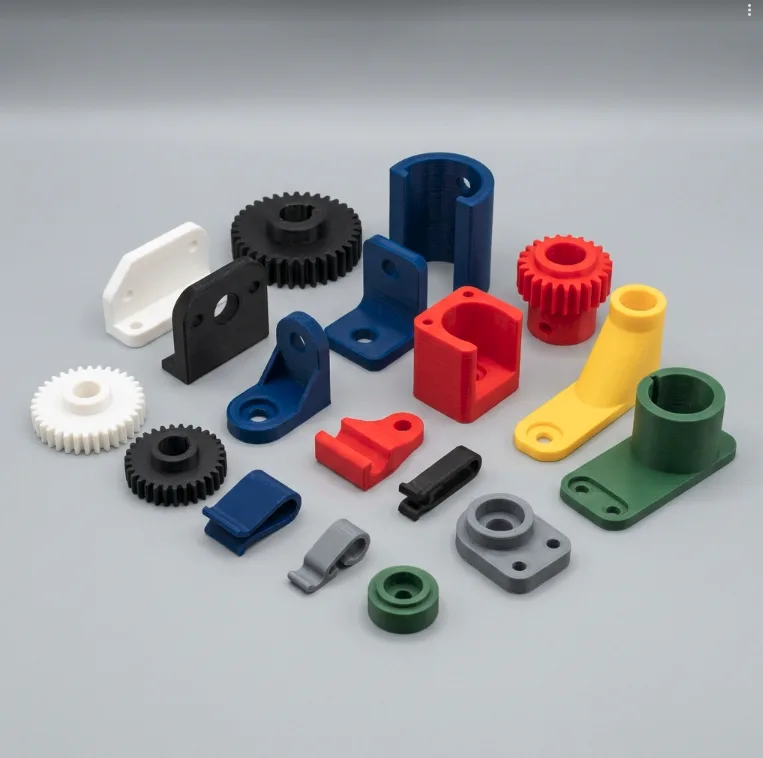


Tap an image to enlarge · swipe for more →
About Our PLA 3D Printing Service
Our PLA 3D printing service in India delivers bio-based Polylactic Acid parts derived from renewable resources like corn starch. PLA is the most widely used FDM material globally — valued for its consistent surface quality, minimal warping, and reliable dimensional accuracy across all part geometries.
Our PLA 3D printing service uses professional industrial-grade FDM machines based in India, achieving surface finishes that sand, prime, and paint beautifully. Its 1.24 g/cm³ density and inherent stiffness make it ideal for structural prototypes, functional brackets, and detailed display models alike.
PLA is biodegradable under industrial composting conditions and derived from renewable sources — making our PLA 3D printing service in India an eco-conscious choice that doesn't compromise on quality or affordability.
Learn more: Polylactic acid — Wikipedia · How PLA is made — NatureWorks
Material Properties
| Property | XY In-Plane | Z Through-Layer | Standard |
|---|---|---|---|
| Tensile Strength | 35 ± 4 MPa | 31 ± 3 MPa | ISO 527 |
| Young's Modulus (Stiffness) | 2580 ± 220 MPa | 2060 ± 170 MPa | ISO 527 |
| Breaking Elongation | 12.2 ± 1.8 % | 7.5 ± 1.3 % | ISO 527 |
| Bending Strength | 76 ± 5 MPa | 59 ± 6 MPa | ISO 178 |
| Bending Modulus | 2750 ± 160 MPa | 2370 ± 150 MPa | ISO 178 |
| Impact Strength — Unnotched | 26.6 ± 2.8 kJ/m² | 13.8 ± 0.9 kJ/m² | ISO 179 |
| Impact Strength — Notched | 7.9 ± 1.2 kJ/m² | — | ISO 179 |
XY = in-plane (along print layers) · Z = through-layer (perpendicular to build direction) · Values are typical; actual results depend on layer height, infill, and geometry.
| Property | Value | Test Method |
|---|---|---|
| Density | 1.24 g/cm³ | ISO 1183 |
| Melting Temperature | 160 °C | DSC, 10 °C/min |
| Glass Transition Temperature | 60 °C | DSC, 10 °C/min |
| Vicat Softening Temperature | 57 °C | ISO 306 |
| Heat Deflection Temp (1.8 MPa) | 54 °C | ISO 75 |
| Heat Deflection Temp (0.45 MPa) | 57 °C | ISO 75 |
| Max Continuous Service Temp. | ~50 °C | — |
| Water Absorption Rate | 0.43% | 25 °C, 55% RH |
| Property | Value |
|---|---|
| Composition | Polylactic Acid (PLA) |
| Origin | Bio-based — corn starch / sugarcane |
| Odour During Printing | Odourless |
| Skin Hazard | None |
| Chemical Stability | Stable under normal conditions |
| Solubility in Water | Insoluble |
| Acid Resistance | Not resistant |
| Alkali Resistance | Not resistant |
| Oil & Grease Resistance | Resistant to most types |
| Biodegradability | Biodegradable under industrial composting |
Performance Ratings
Available Colours
✦ Marble is part of our Special Series. All colours are confirmed stock. Contact us for custom colour requirements on bulk orders.
Design Guidelines for PLA 3D Printing
PLA is ideal for indoor, room-temperature use. If your part will face heat above 50 °C, outdoor UV, or high mechanical stress, we recommend PLA+, ABS, or PETG — all available from our service. Use our live chat or email us and we'll help you choose the right material for your requirements.