



PA12-CF
PA12-CF — High-Temp CF.
Wet-State Strong.
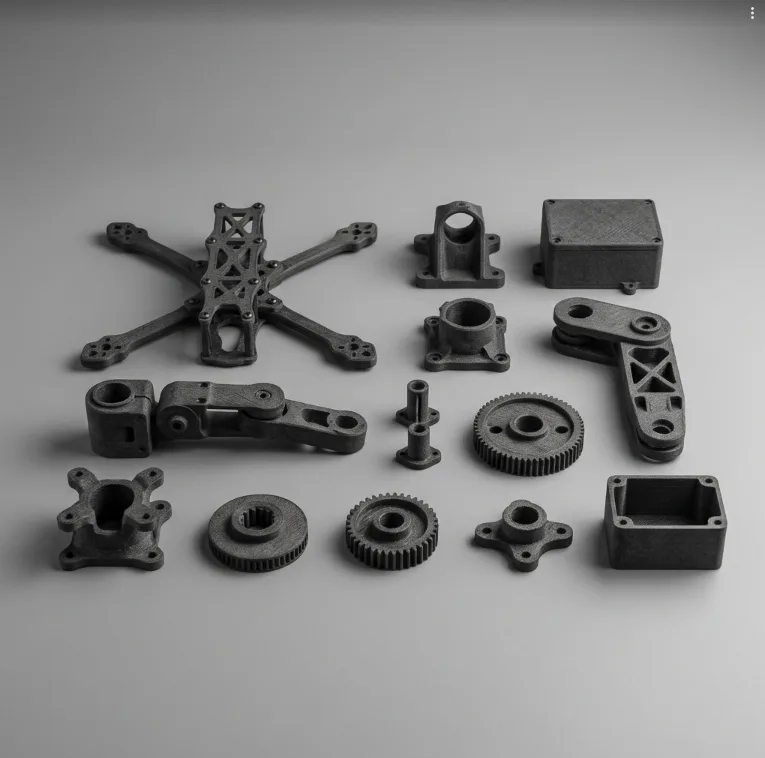
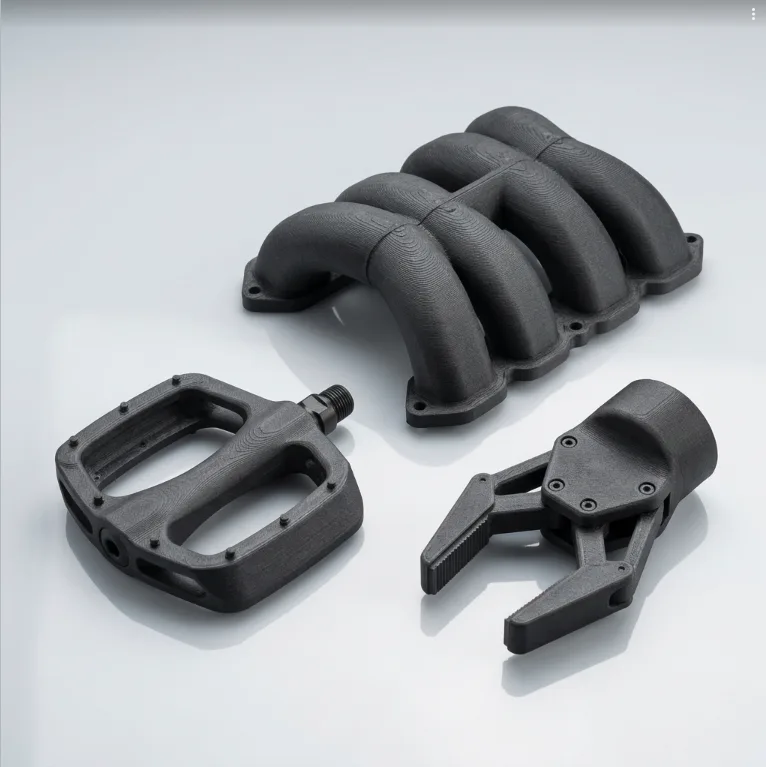
Our PA12-CF 3D printing service India delivers PA12 carbon fibre nylon parts engineered for extreme conditions — 170°C heat deflection temperature, 92 MPa tensile strength, and a unique design optimised to retain full mechanical properties even when wet. The easy-print CF nylon for functional prototypes, machining fixtures, and low-volume production parts.
Get Instant Quote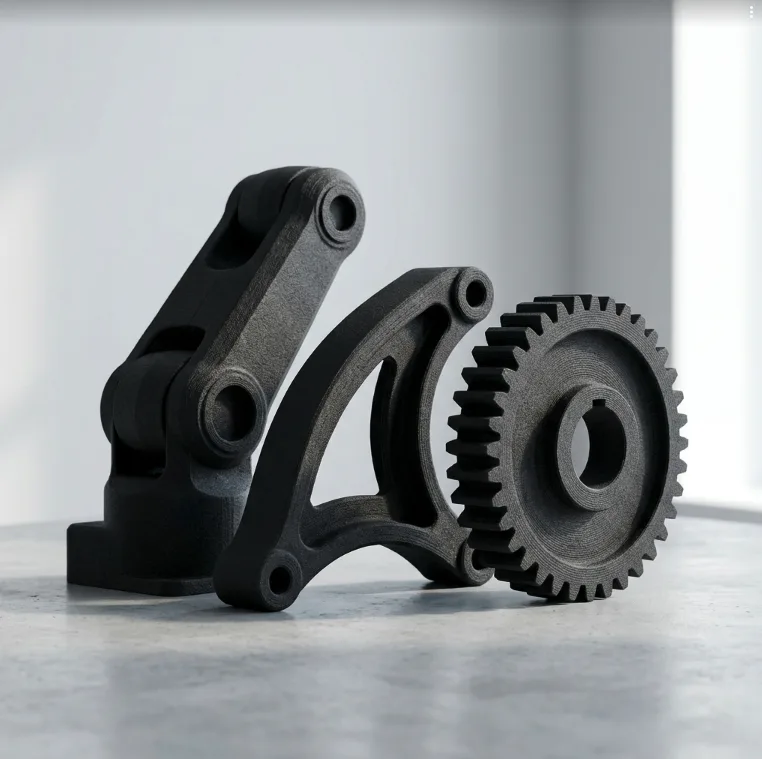

Tap an image to enlarge · swipe for more →
About Our PA12-CF 3D Printing Service India — PA12 Carbon Fibre Nylon
PA12-CF is a high-temperature carbon fibre reinforced nylon based on PA12 and other long-chain polyamides. It combines the best of both worlds: the low moisture absorption and dimensional stability of PA12 with the stiffness and heat resistance of short carbon fibre reinforcement — all in a formulation engineered to retain excellent mechanical properties even in wet or humid conditions.
With a 170°C heat deflection temperature at 1.8 MPa (the highest of all our FDM materials), 92 MPa tensile strength XY, and a 3860 MPa Young's modulus, PA12-CF approaches PA6-CF in structural performance while offering significantly better printability — including a chamber temperature of 45–60°C, up to 40% cooling fan, and enhanced Z-axis bonding that reduces delamination risk.
Our PA12-CF 3D printing service India uses fully enclosed FDM machines with hardened steel nozzles (0.6 mm recommended), engineering-grade build plates, and mandatory pre-drying at 80°C for 8–12 hours. Ideal for high temperature carbon fibre nylon FDM parts that need to survive both elevated temperatures and exposure to moisture in service.
Material Properties
| Property | XY In-Plane | Z Through-Layer | Standard |
|---|---|---|---|
| Young's Modulus (Stiffness) | 3860 ± 230 MPa | 2180 ± 130 MPa | ISO 527 |
| Tensile Strength | 92 ± 7 MPa | 47 ± 5 MPa | ISO 527 |
| Breaking Elongation | 8.4 ± 1.8 % | 4.1 ± 1.2 % | ISO 527 |
| Bending Modulus | 4230 ± 210 MPa | 1820 ± 170 MPa | ISO 178 |
| Bending Strength | 125 ± 7 MPa | 61 ± 5 MPa | ISO 178 |
| Impact Strength — Unnotched | 57.5 ± 3.4 kJ/m² | 13.3 ± 0.8 kJ/m² | ISO 179 |
| Impact Strength — Notched | 22.8 ± 1.8 kJ/m² | — | ISO 179 |
XY = in-plane (along print layers) · Z = through-layer (perpendicular to build direction) · Dry-state values; specimens annealed at 80°C / 12 h before testing per Bambu Lab TDS V3.0.
| Property | Value | Test Method |
|---|---|---|
| Density | 1.06 g/cm³ | ISO 1183 |
| Melt Flow Index | 14.4 ± 2.0 g/10 min (280°C / 2.16 kg) | — |
| Melting Temperature | 225°C | DSC, 10°C/min |
| Glass Transition Temperature | 70°C | DSC, 10°C/min |
| Crystallisation Temperature | 140°C | DSC, 10°C/min |
| Vicat Softening Temperature | 220°C | ISO 306 |
| Heat Deflection Temp (1.8 MPa) | 170°C | ISO 75 |
| Heat Deflection Temp (0.45 MPa) | 194°C | ISO 75 |
| Saturated Water Absorption | 0.88% (25°C, 55% RH) | — |
| Print Temperature | 260–290°C | — |
| Bed Temperature | 80–100°C | — |
| Chamber Temperature | 45–60°C | — |
| Cooling Fan | 0–40% | — |
| Max Print Speed | < 100 mm/s | — |
| Pre-drying Required | 80°C / 8–12 hours | — |
| Storage Humidity | < 20% RH (sealed with desiccant) | — |
| Recommended Nozzle | 0.6 mm hardened steel (preferred) | — |
| Max Overhang Angle | ~70° | — |
| Max Bridge Length | ~40 mm | — |
| Suggested Annealing | 80–130°C, 6–12 h (blast oven) | — |
| Property | Value |
|---|---|
| Composition | PA12 and other long-chain polyamides with short carbon fibre reinforcement |
| Odour During Printing | Odourless |
| Skin Hazard | No hazard |
| Chemical Stability | Stable under normal storage and handling conditions |
| Solubility in Water | Insoluble (moderate hygroscopic — must be kept dry) |
| Water Absorption (Saturated) | 0.88% — very low; wet-state properties well-retained |
| Oil & Grease Resistance | Resistant to most oils and greases |
| Acid Resistance | Not resistant |
| Alkali Resistance | Not resistant |
| Organic Solvent Resistance | Not resistant to some organic solvents |
| Flammability | Flammable |
Performance Ratings
Available Colours
✦ 1 stock colour (Carbon Black). PA12-CF has a distinctive matte dark carbon fibre appearance. Contact us for bulk order enquiries.
Design Guidelines for PA12-CF
For maximum stiffness at a lower cost, PA6-CF offers 5460 MPa bending modulus but is more moisture-sensitive. For applications below 100°C requiring toughness and wet-state stability without carbon fibre, PA12 is a lighter and more flexible option. PA12-CF is the definitive choice when you need high temperature + structural stiffness + humidity resilience simultaneously.