



Material Guide
Complete 3D Printing Materials Guide — FDM & SLA
This 3D printing materials guide covers all 18 production-ready materials available at Dwart Industries — 15 FDM filament materials and 3 SLA resin materials. Choosing the right material is the single most important decision in any 3D printing project. Therefore, use the filters below to find the best material for 3D printing your specific application. For background on the manufacturing process, see FDM layer-by-layer manufacturing. Once your material is selected, head to our Settings Guide for layer height and infill, or our Design Guide for DfM specifications.
3D Printing Material Guide — FDM vs SLA Technologies
Both FDM filament materials and SLA resin materials are available at Dwart Industries. The overview below will help you choose the right process before selecting a specific material.
15 Engineering Thermoplastics
Thermoplastic filament melted layer by layer. Best for functional parts, structural components, and large-volume production across a wide range of engineering FDM filament materials.
3 Photopolymer Resins
UV-cured photopolymer for ultra-fine detail and smooth surface finish. Best for miniatures, dental, and optical prototypes where near-injection-moulded quality is required from SLA resin materials.
FDM Filament Materials
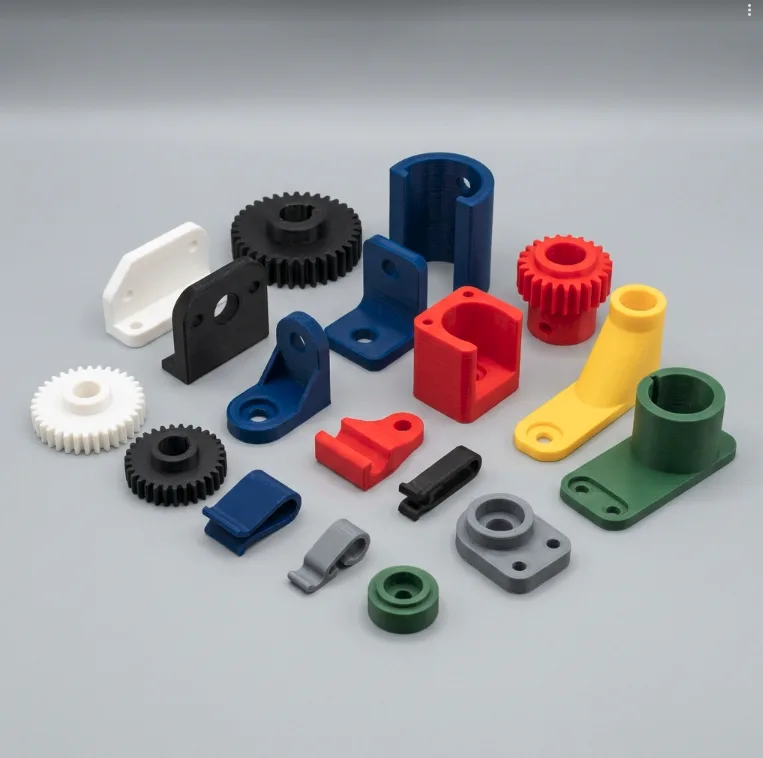
PLA
FDMBio-based general purpose filament. Best surface finish and easiest to print in our FDM lineup — ideal for prototypes, display models, and educational parts.

PLA+
FDMImpact-modified PLA with 46 MPa tensile and measurably higher ductility. The natural step-up for functional assemblies and snap-fit parts.
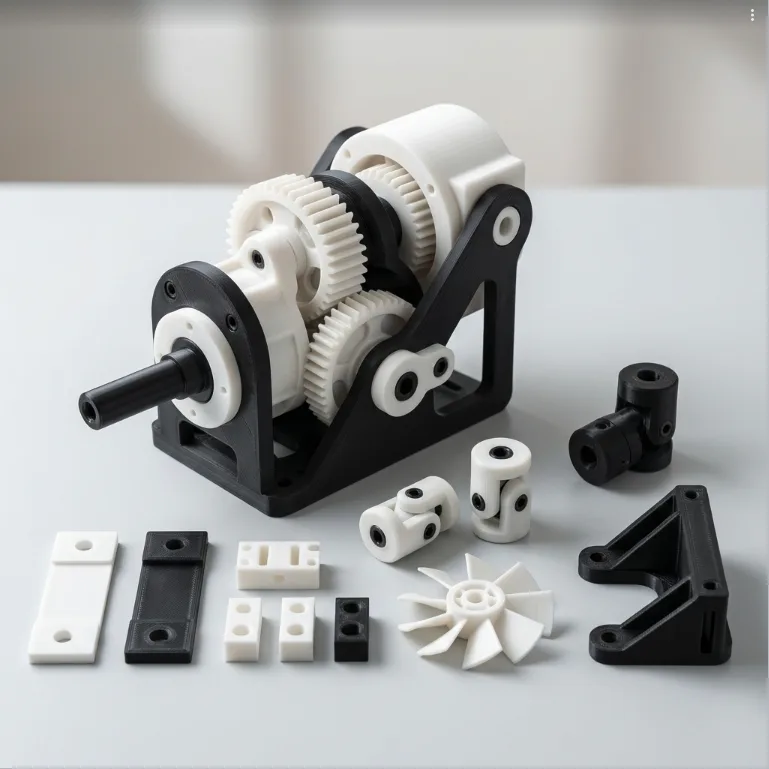
Hyper PLA
FDMProfessional high-flow PLA for speeds up to 600 mm/s. 53 MPa tensile — stronger than ABS. Our top-tier PLA for structural and rapid-turnaround parts.
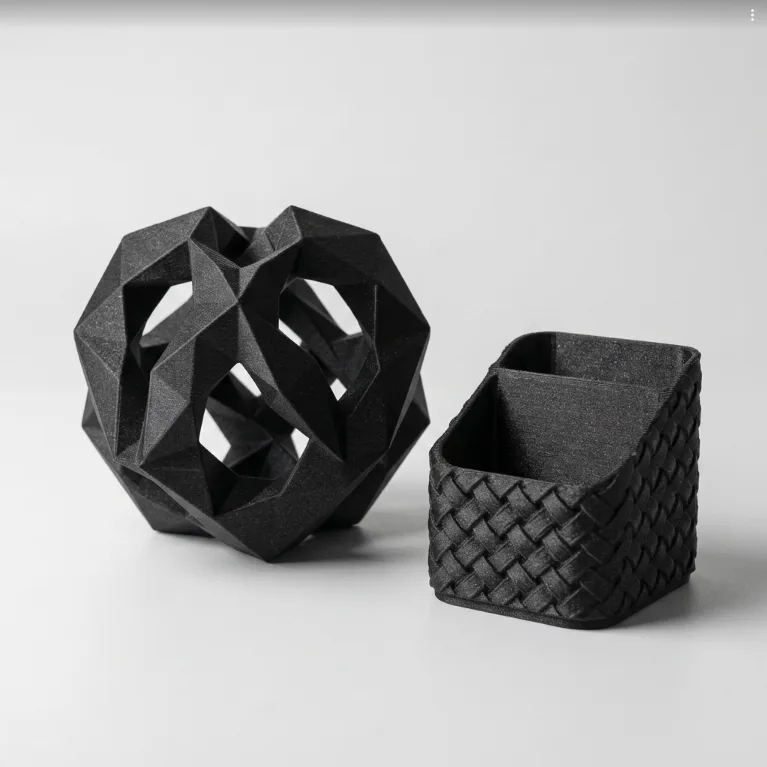
PLA-CF
FDMCarbon fibre reinforced PLA with a premium matte finish and near-invisible layer lines. 3950 MPa bending modulus — the easiest carbon fibre material to print, no enclosure needed.

PETG
FDMBest balance of printability, chemical resistance, and toughness. 34 MPa tensile, excellent layer adhesion, minimal warping — a reliable all-rounder for functional parts.

PETG-CF
FDMCarbon fibre reinforced PETG with the lowest water absorption in our lineup at 0.30%. 2910 MPa bending modulus, no warping, easiest CF material to print after PLA-CF.

TPU 95A
FDMRubber-like flexible filament with >650% elongation at break and 123 kJ/m² impact strength. The only flexible material in our FDM lineup — for seals, grips, and absorbers.
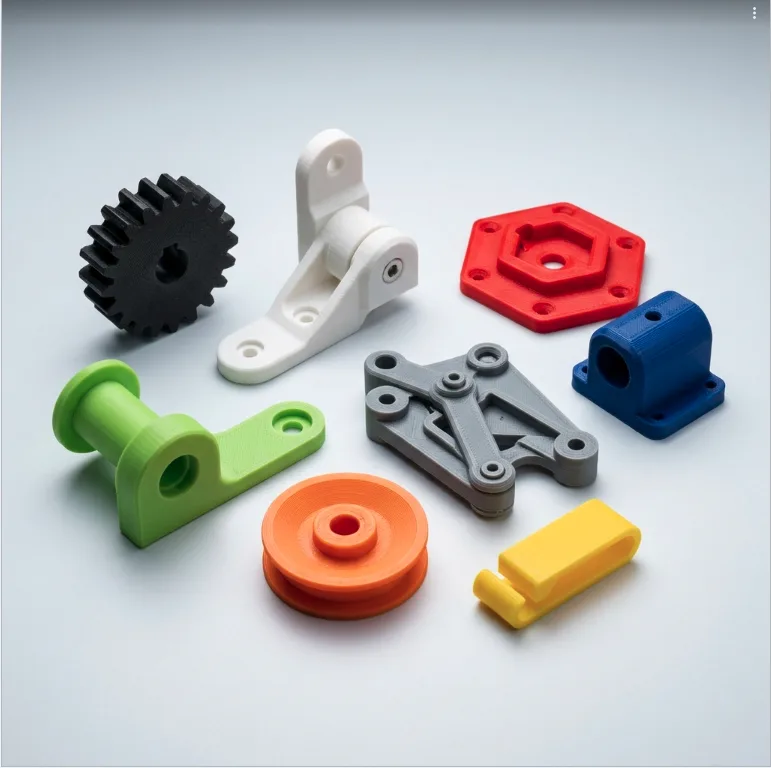
ABS
FDMIndustry-standard thermoplastic. 84°C HDT with acetone vapour smoothing — ideal for automotive parts, electrical housings, and functional enclosures.

Hyper ABS
FDMAdvanced ABS formula with significantly reduced warping, 76°C HDT, and speeds up to 350 mm/s. Our recommended ABS-class material for most heat-resistant applications.
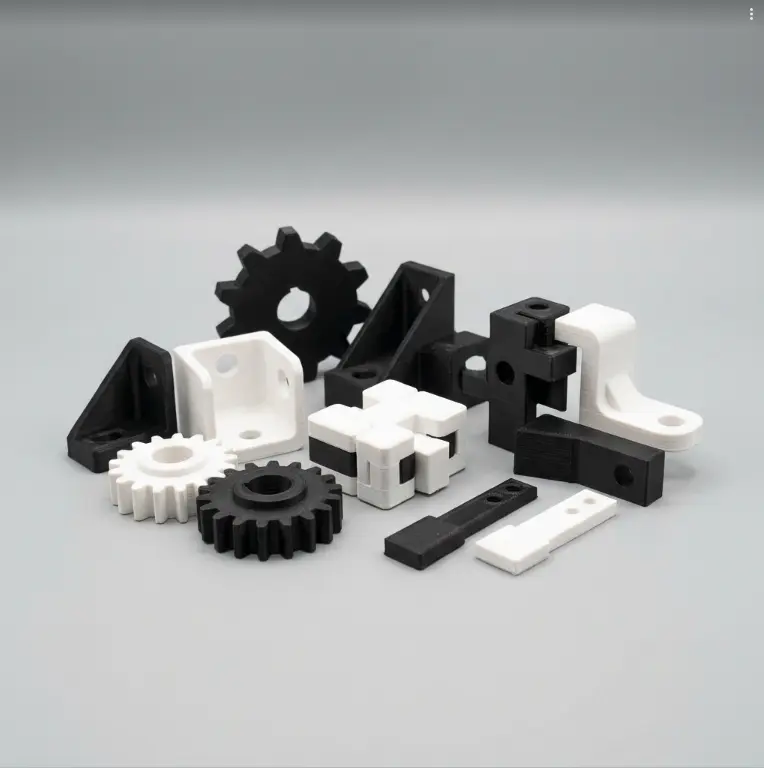
ASA
FDMUV and weather-resistant outdoor-grade thermoplastic. Won’t yellow or embrittle in sunlight like ABS. 92°C HDT, resistant to both acid and alkali.

PC
FDMHigh-performance engineering plastic with 117°C HDT and 55 MPa tensile. Available in optical Clear and Jet Black. Our highest-temperature standard FDM material.
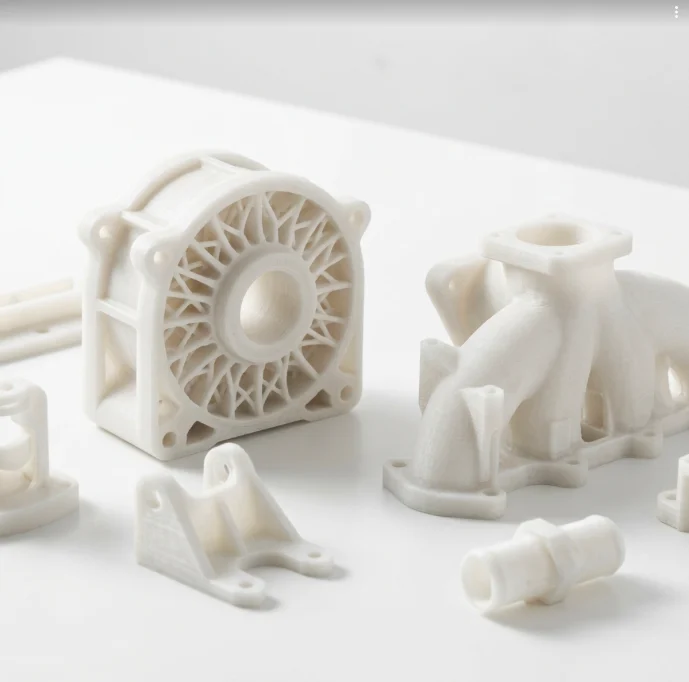
PA6 Nylon
FDMEngineering-grade Nylon 6 with excellent stiffness and dimensional stability. 75 MPa tensile, 158°C HDT — high performance at lower cost than PA6-CF.
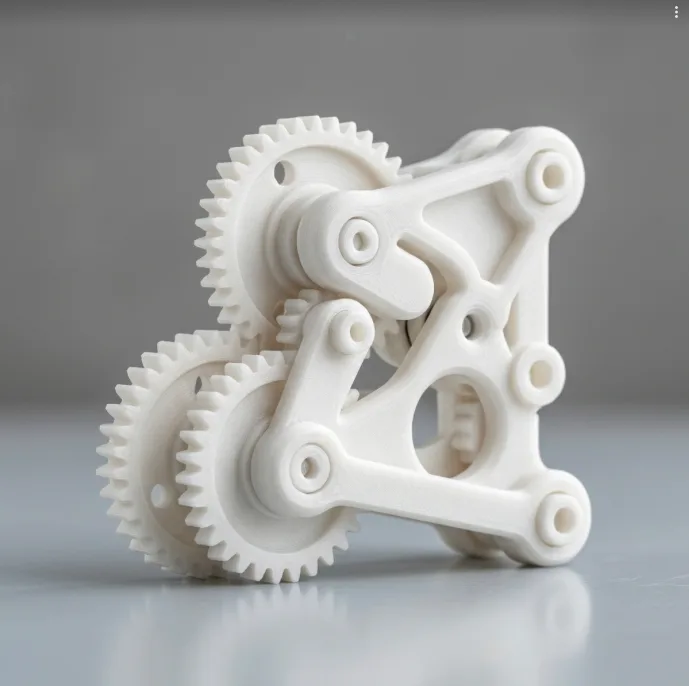
PA12 Nylon
FDMSelf-lubricating engineering nylon with very low moisture absorption — stays dimensionally stable in humid conditions where PA6 warps. Ideal for gears and sliding parts.
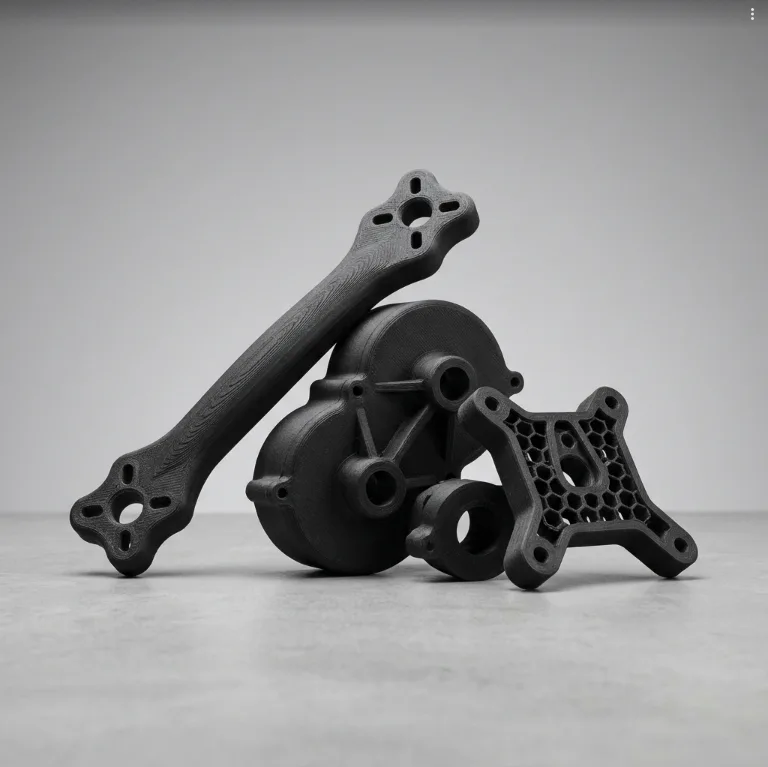
PA6-CF
FDMCarbon fibre reinforced nylon — our strongest FDM material. 102 MPa tensile, 164°C HDT, 4430 MPa modulus. For drone frames, jigs, and structural brackets.
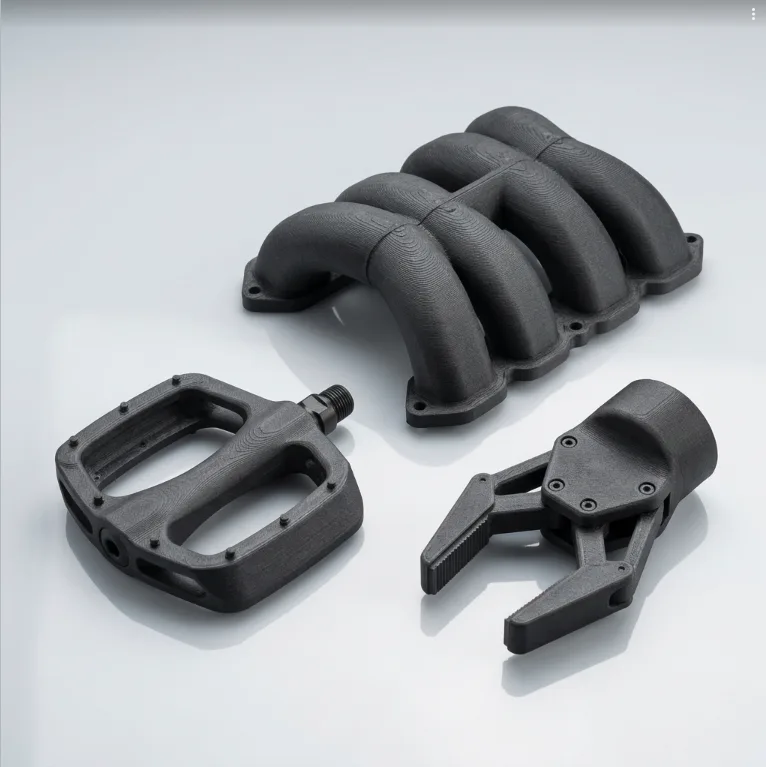
PA12-CF
FDMCarbon fibre nylon with the highest HDT in our FDM range — 170°C — and mechanical properties that hold up even when wet. For injection mould tooling and structural aerospace parts.
SLA Resin Materials
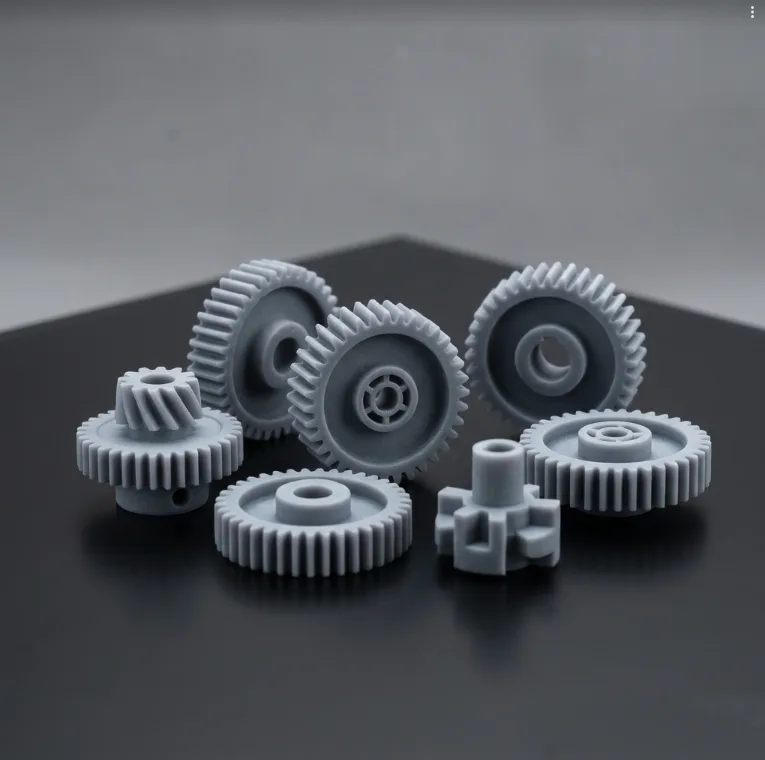
Standard Resin
SLABest surface detail in our entire lineup. 0.025 mm layer height, features down to 0.1 mm — ideal for miniatures, dental mockups, jewellery masters, and display prototypes.
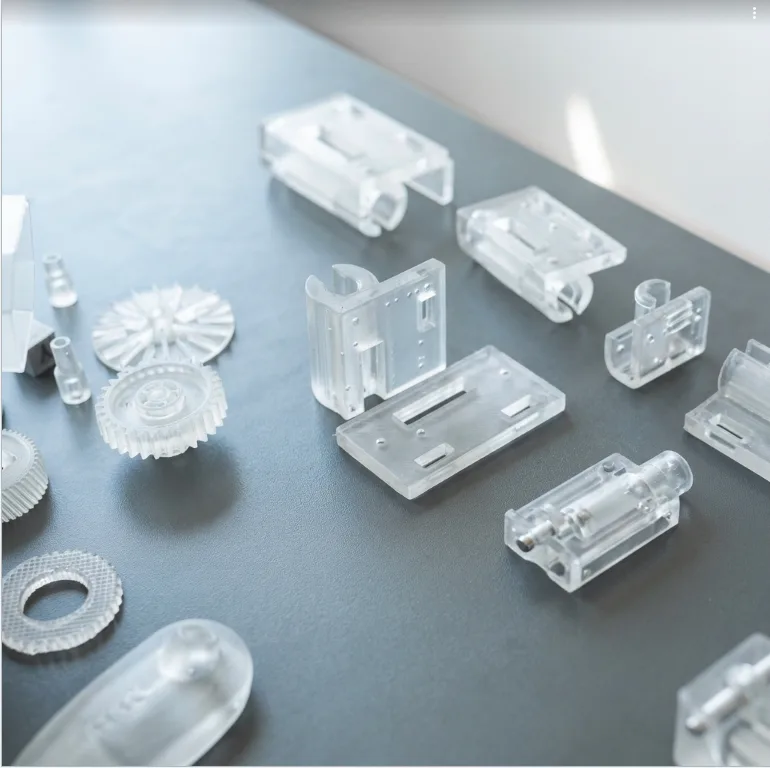
Clear Resin
SLANear-optical clarity photopolymer. Light-transmissive with excellent surface quality — ideal for lenses, light guides, transparent enclosures, and fluidic prototypes.

Tough Resin
SLAImpact-resistant photopolymer with 14–25% elongation at break. Bridges the gap between brittle standard resin and engineering plastics — for snap-fits, enclosures, and functional parts.
No materials match
Try adjusting your filters or to see all 18 materials.
3D Printing Material Guide — Side-by-Side Comparison
Verified mechanical properties across all 18 FDM filament materials and SLA resin materials. Use this table to select the best material for 3D printing your specific application.
| Material | Tech | Tensile | HDT | Density | Print Ease | Best For | Guide |
|---|---|---|---|---|---|---|---|
| PLA | FDM | 35 MPa | 54–60°C | 1.24 g/cm³ | Prototypes, display models | View → | |
| PLA+ | FDM | 46 MPa | ~60°C | 1.24 g/cm³ | Snap-fits, functional brackets | View → | |
| Hyper PLA | FDM | 53 MPa | ~62°C | 1.25 g/cm³ | High-speed structural parts | View → | |
| PLA-CF | FDM | 38 MPa | ~54°C | 1.22 g/cm³ | Display models, drone frames | View → | |
| PETG | FDM | 34 MPa | 62°C | 1.28 g/cm³ | Chemical resistance, enclosures | View → | |
| PETG-CF | FDM | 35 MPa | 68°C | 1.25 g/cm³ | Low-moisture structural parts | View → | |
| TPU 95A | FDM | 27 MPa | — | 1.22 g/cm³ | Seals, grips, shock absorbers | View → | |
| ABS | FDM | 33 MPa | 84°C | 1.05 g/cm³ | Automotive, electrical housings | View → | |
| Hyper ABS | FDM | 30 MPa | 76°C | 1.05 g/cm³ | Heat parts, low warping | View → | |
| ASA | FDM | 37 MPa | 92°C | 1.05 g/cm³ | Outdoor, UV-exposed parts | View → | |
| PC | FDM | 55 MPa | 117°C | 1.20 g/cm³ | Optical parts, high-temp | View → | |
| PA6 Nylon | FDM | 75 MPa | 158°C | 1.14 g/cm³ | Industrial, automotive brackets | View → | |
| PA12 Nylon | FDM | 51 MPa | 100°C | 1.01 g/cm³ | Gears, wear-resistant parts | View → | |
| PA6-CF | FDM | 102 MPa | 164°C | 1.09 g/cm³ | Structural, aerospace, UAV | View → | |
| PA12-CF | FDM | 92 MPa | 170°C | 1.06 g/cm³ | High-temp tooling, aerospace | View → | |
| Standard Resin | SLA | 36–53 MPa | Moderate | ~1.195 g/cm³ | Miniatures, display, dental | View → | |
| Clear Resin | SLA | 28–38 MPa | Moderate | 1.05–1.25 g/cm³ | Lenses, light guides, optical | View → | |
| Tough Resin | SLA | 36–53 MPa | Moderate | ~1.195 g/cm³ | Snap-fits, functional enclosures | View → |
3D Printing Material Guide — Find by Application
Match your application below to find the best material for 3D printing your part. Click any material pill to go directly to its full spec page.
Prototypes & Display
High surface quality, paintable, accurate dimensions.
Functional Mechanical
Structural, snap-fits, load-bearing assemblies.
What Our Engineers Verify Before Every Order
Every order using these 3D printing materials passes an engineering review before manufacturing. Consequently, the following checks are run on every file.
Material Suitability
We confirm the selected 3D printing material is appropriate for your geometry, load requirements, and application. Therefore, any mismatches are flagged before production begins.
Orientation & Support Strategy
Optimal build orientation is selected for each FDM filament material and SLA resin material. As a result, surface finish and strength are maximised on every print.
Geometry Review
Wall thickness, overhangs, and features are verified against our Design Guide specifications for the chosen 3D printing material before production.
Settings Optimisation
Layer height, infill, temperature, and speed profiles are configured per material. See our Settings Guide for the parameters you set at order time.
Not sure which material to choose?
Our engineers review every order before production. Use the instant quote to select from all 18 3D printing materials — or contact us and we will recommend the best material for 3D printing your specific part.