
FDM 3D Printing Service

PC — Maximum Toughness.
High Heat Resistance.

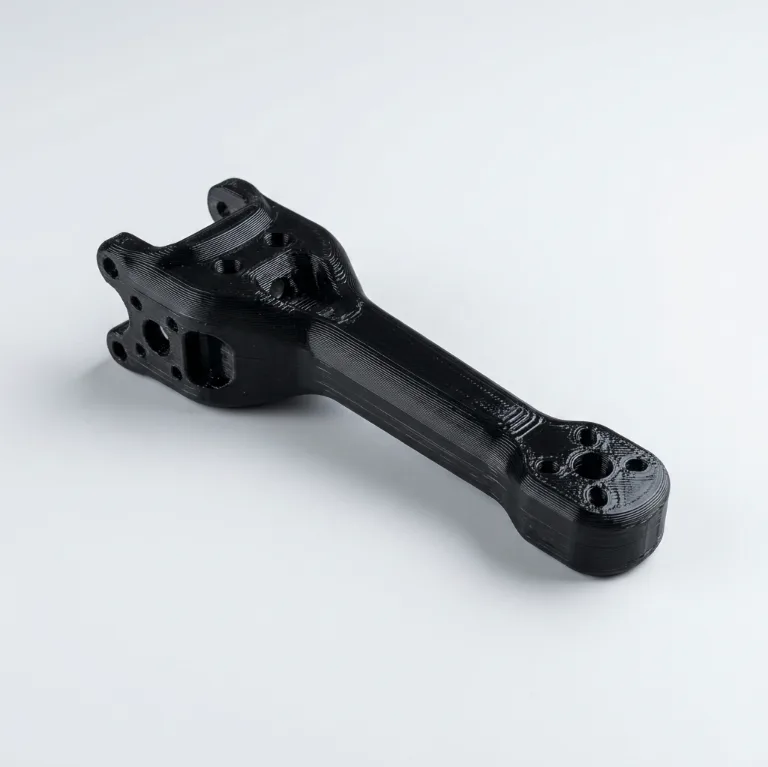
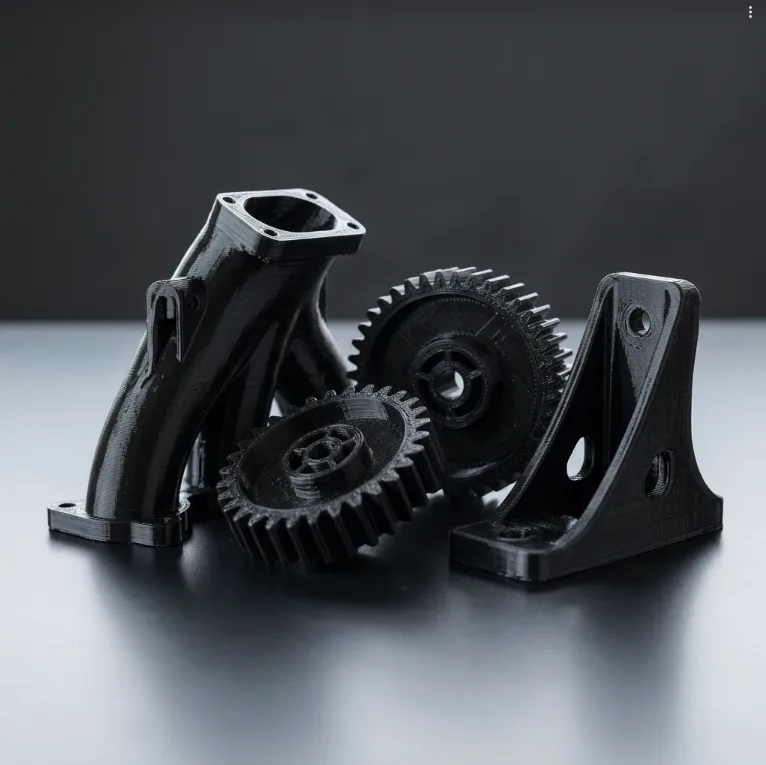
Polycarbonate is the toughest and most heat-resistant standard FDM material we offer. 117°C HDT, 55 MPa tensile strength, natural optical transparency, and excellent dimensional stability make it the choice for demanding engineering applications.

Get Instant Quote
±0.2mm Tolerance
117°C HDT
2 Colours
2–5 Days Turnaround
260×260×260 mm Max Part Size
0.1 mm Min Layer Height
Pan-India Delivery

About PC (Polycarbonate)

PC (Polycarbonate) is an exceptionally tough, dimensionally stable engineering thermoplastic. Its 117°C heat deflection temperature and 145°C glass transition temperature allow it to function in environments that destroy PLA, PETG, and even ABS — making it the top-of-range standard FDM material in our lineup.

We use Bambu PC — a formulation designed for reduced shrinkage and superior dimensional stability, printed on enclosed, high-temperature-capable FDM machines with chamber heating and glue bed preparation. Its 1.20 g/cm³ density and 55 MPa tensile strength make it ideal for demanding structural and thermal applications.

PC is naturally transparent — Clear PC parts can be post-processed to high optical clarity. It is inherently tough with 34.8 kJ/m² impact strength (XY) and maintains its properties from sub-zero temperatures up to ~115°C in service.

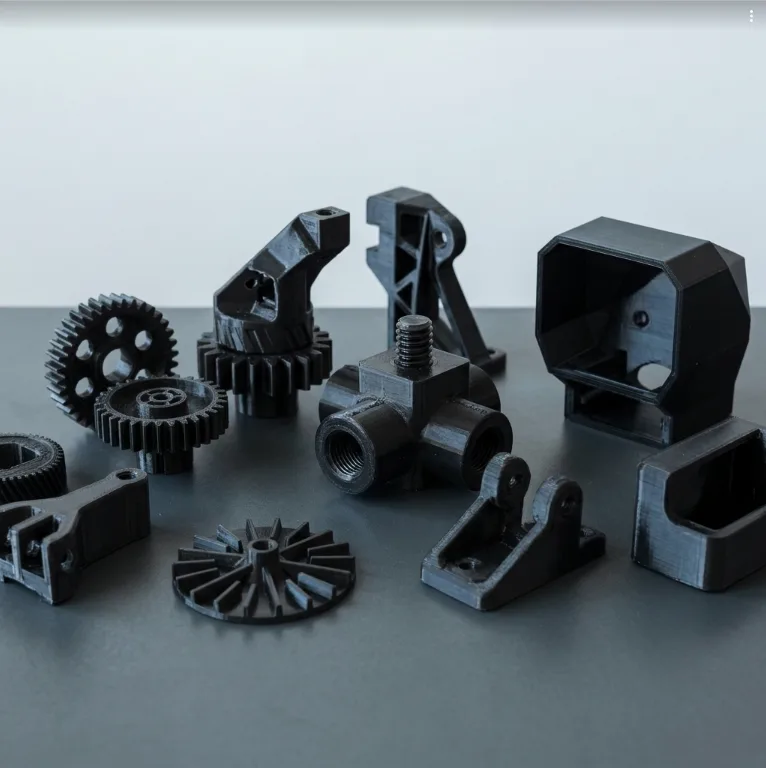
High-Temperature Enclosures Heat-exposed enclosures, lamp housings, and thermal barriers
Optical Components Lenses, light guides, diffusers, and transparent covers
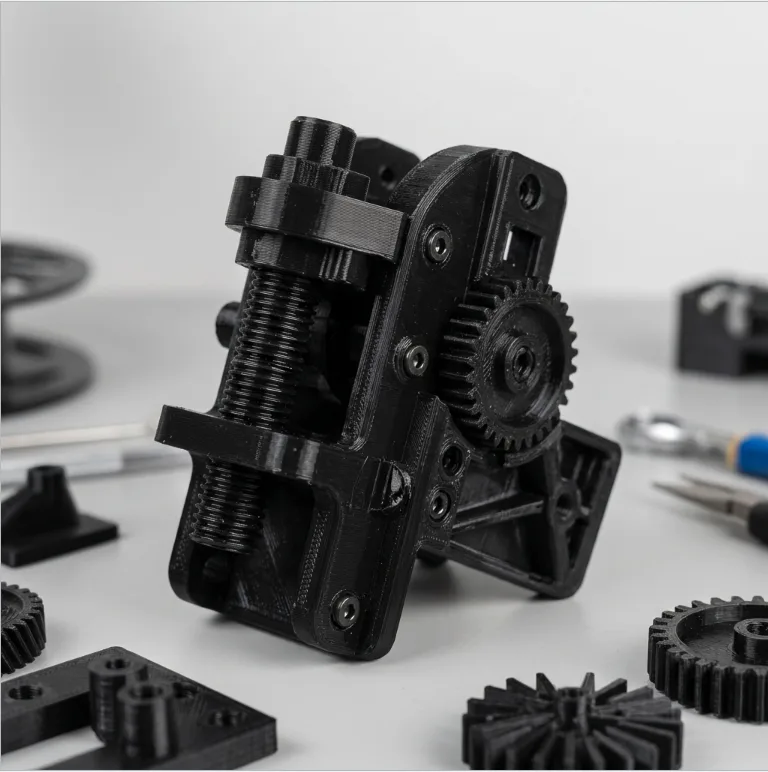
Structural Components High-load brackets, frames, and structural supports
Automotive Components Headlight lenses, under-hood parts, and sensor housings
Medical Equipment Housings Sterilisation-compatible parts and diagnostic device enclosures

Material Properties

Property XY In-Plane Z Through-Layer Standard
Tensile Strength 55 ± 4 MPa 34 ± 3 MPa ISO 527
Young's Modulus 2110 ± 40 MPa 1450 ± 60 MPa ISO 527
Breaking Elongation 3.8 ± 0.3 % 2.1 ± 0.4 % ISO 527
Bending Strength 108 ± 4 MPa 55 ± 2 MPa ISO 178
Bending Modulus 2310 ± 70 MPa 1620 ± 80 MPa ISO 178
Impact Strength — Unnotched 34.8 ± 2.1 kJ/m² 9.0 ± 0.4 kJ/m² ISO 179
Impact Strength — Notched 7.5 ± 1.3 kJ/m² ISO 179

XY = in-plane (along print layers)  ·  Z = through-layer (perpendicular to build direction)  ·  Values are typical; actual results depend on layer height, infill, and geometry.

PropertyValueTest Method
Density1.20 g/cm³ISO 1183
Melting Temperature228 °CDSC, 10 °C/min
Glass Transition Temperature145 °CDSC, 10 °C/min
Vicat Softening Temperature119 °CISO 306
Heat Deflection Temp (1.8 MPa)117 °CISO 75
Heat Deflection Temp (0.45 MPa)112 °CISO 75
Max Continuous Service Temp.~115 °C
Print Temperature260–280 °C
Bed Temperature90–110 °C
Max Print Speed< 300 mm/s
Water Absorption Rate0.25%25 °C, 55% RH
PropertyValue
CompositionPolycarbonate (PC)
OriginPetroleum-based
Optical ClarityNaturally transparent in Clear colour
Odour During PrintingOdourless
Skin HazardNone
Chemical StabilityStable under normal conditions
Solubility in WaterInsoluble
Acid ResistanceNot resistant
Alkali ResistanceNot resistant
Oil & Grease ResistanceResistant to most oils and greases

Performance Ratings

Heat Resistance10/10
117°C HDT — highest of all standard FDM materials
Tensile Strength8/10
55 MPa XY — strongest standard FDM in our lineup
Optical Clarity9/10
Clear PC polishable to excellent light transmission
Impact Resistance7/10
34.8 kJ/m² unnotched — genuinely tough
Ease of Printing4/10
Needs enclosure, high temps, glue bed, and pre-drying
Dimensional Stability8/10
Low shrinkage formulation for tight tolerances

Available Colours

Clear
Jet Black

✦ 2 stock colours available (Clear and Jet Black). Contact us for custom colour requirements on bulk orders.

Design Guidelines for PC

Wall Thickness
Min 1.2 mm
Aim for 2–3 mm on structural parts
Overhangs
Max 45°
Beyond 45° requires support structures
Fit Clearance
0.3–0.5 mm
For mating parts and snap-fits
Min Hole Size
2 mm dia.
Smaller holes may partially close
Text / Emboss
Min 0.8 mm
Raised text: 0.8 mm tall, 1.5 mm wide
Tolerance
±0.2 mm
Typical achieved across all geometries
Part Orientation
Load-aligned
Align layers with primary stress direction
Infill Options
5–100%
Gyroid pattern for optimal strength/weight
Post-Processing
Sand + Paint
120–800 grit, then filler primer + paint
Not sure if PC is right for your application?

For most functional parts under 80 °C, ABS or Hyper ABS is more printable and cost-effective. For flexible parts, TPU 95A is available. For maximum stiffness and strength at high temperatures, PA6-CF (carbon fibre nylon) is our top engineering material.

Common Applications

High-Temperature Enclosures
Optical & Light Guides
Structural Brackets
Automotive Lighting
Medical Device Parts
Sensor Housings
Load-Bearing Parts
Transparent Covers
Industrial Components
Functional Prototypes

Frequently Asked Questions

PC is the choice when you need the highest heat resistance and structural strength from a standard FDM material. Ideal for high-temperature enclosures, optical components, automotive lighting, load-bearing brackets, and any engineering application where ABS or PETG reach their limits.
PC has a heat deflection temperature of 117°C and a glass transition temperature of 145°C — significantly higher than any other standard FDM material we offer. PC parts can be used in car interiors, near heat sources, in industrial environments, and for parts that must survive sterilisation cycles.
Clear PC has excellent natural transparency. As-printed, layer lines reduce light transmission, but the surface can be sanded and polished progressively (up to 2000 grit + polish) to achieve near-optical clarity. This makes it suitable for light guides, lenses, and diffusers where glass-like appearance is needed.
PC requires high nozzle temperatures (260–280°C), a heated bed (90–110°C), an enclosed chamber, and glue bed preparation. Without these conditions, it warps severely. Our machines are fully equipped for PC printing, but we recommend discussing your geometry with us first for large flat parts.
PC offers higher transparency and better impact resistance, while PA6-CF (carbon fibre nylon) provides far superior stiffness (5460 MPa bending modulus vs 2310 MPa for PC) and higher strength (151 MPa bending strength). For maximum structural performance, PA6-CF is the superior material. PC is the better choice when optical clarity or high impact toughness are the priority.