



Blog
How Much Does Custom 3D Printing Cost in Chennai? Factors That Affect Pricing

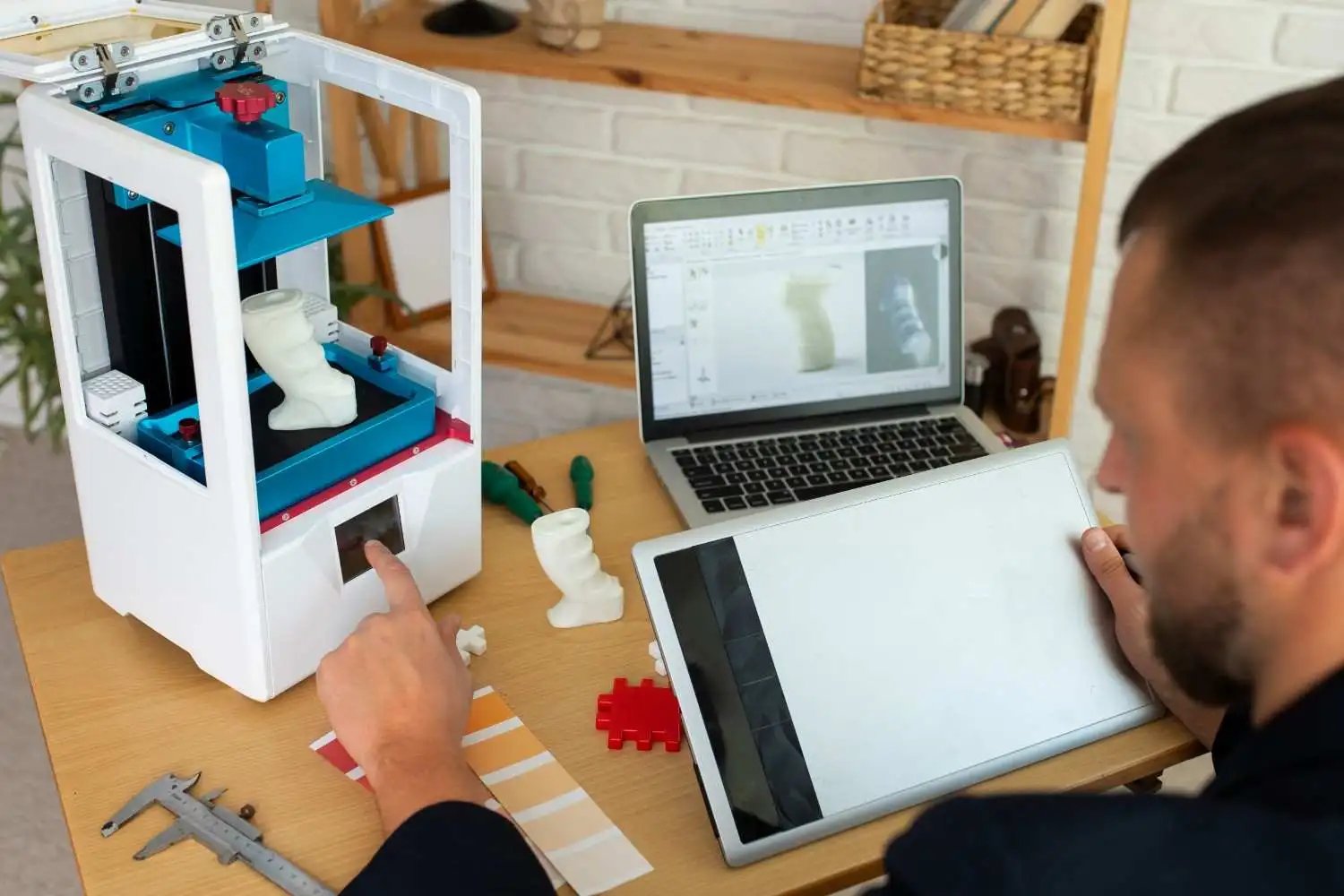
A bracket might range from roughly ₹300 to ₹3,000 depending on the variables below. Same part category, same city, wildly different prices. The difference is four decisions made before the file even hits a printer: material, geometry, finish, and batch size. This piece walks through each one with real numbers, so you can estimate cost before you upload a design instead of getting surprised by the quote. If you’ve compared quotes for custom 3D printing services in India and couldn’t work out why they varied significantly, this explains it. It also covers what specifically changes when you’re ordering 3D printing services in Chennai.
Why 3D Printing Quotes Vary So Widely
Ask five providers for a quote on the same STL file, and you’ll get five different numbers. Most people assume the highest one is a rip-off and the lowest one is the best deal. Neither assumption holds.
The real issue is that most quoting pages show you a final number and nothing else. No explanation for why Nylon costs meaningfully more than PLA per gram, or why a part that looks simple on screen can take longer to print than one that looks complex.
You’re not missing a skill. You’re missing the numbers nobody bothered to show you. You’re not bad at estimating cost. You just don’t have the variables in front of you.
The variables that actually move the price
Custom 3D printing services price jobs on a mix of material consumption, machine time, and labour.
Material: Filaments and resins come at different prices based on their price per gram and aren’t interchangeable when it comes to strength or heat resistance. PLA and PLA+ are the cheapest, fine for prototypes and display models. ABS and PC cost more and hold up better against heat and stress. For functional and load-bearing components, PA6 Nylon and PA6-CF are at the top.
Resin: Resin comes in several types (Standard, Clear, Tough), is priced separately from filament, and works best when surface detail matters more than strength. Don’t over-spec the material if it won’t face a drop test or sit near a heat source.
Part volume and geometry: A solid (dense) shape requires more material and print time than a hollow shape of equal outer dimensions. Overhangs and unsupported geometry need support structures – extra material that gets discarded after printing, plus labor to remove it.
Infill density: This is the internal lattice that exists within a printed part, typically 10 – 100%, depending on the strength required. Infill for decorative pieces can be between 10% and 20%. Anything drilled, screwed into, or load-bearing needs 50% infill or higher. Higher infill density means more material, more machine time, and higher cost.
Layer height and resolution: The thinner the layers, the better the resolution and the smoother the surface, but the print takes longer, since the machine makes more passes to reach the same height. A thicker layer height costs less and won’t be noticed on a functional bracket nobody’s inspecting closely. If it’s a display or mock-up, you’re paying for resolution.
Post-processing: sanding, dyeing, UV curing for resin, support removal – this is labor cost on top of print time. A raw FDM part costs less than one with a painted or polished finish. Decide how much finish you actually need instead of defaulting to the premium option.
Batch size: Printing one part and printing fifty of the same part don’t cost fifty times as much. Setup, file review, and machine calibration are fixed costs that get spread across the run. If you know you’ll need multiple units eventually, ordering them together beats ordering one now and four later.
Turnaround and shipping: This is where Chennai-specific details matter. Standard FDM and SLA orders ship within 3-8 business days based on queue and complexity; Chennai deliveries go via 2-day air shipping after the item leaves the premises. Free shipping kicks in above ₹999, so a single prototype won’t be cost-prohibitive.
Run through this before you order:
- Does this part need to survive stress, heat, or repeated handling? → spend on material
- Is this a one-off visual prototype? → cheapest material, lower infill, standard layer height
- Will you need more later? → order the batch now
- Does the surface need to look polished for a client or investor? → budget for post-processing
A design check before printing.
A file that looks fine on screen can fail in print if wall thickness is too thin or supports are missing where they’re needed. A design-for-manufacturability (DfM) review, done before the job enters the queue, catches this early – before you pay for a failed print and a reprint. Any provider offering custom 3D printing India should be doing this as standard.
Know Your Number Before You Order
Getting a price for custom 3D printing services in India doesn’t need to be a puzzle, and customers shouldn’t have to go back and forth over email just to find out the cost. Send your file, pick your material and finish, and get an estimate that shows exactly how each factor affects the cost. Whether you need a prototype, a production run, or a single functional part, contact us with the technical details. Our team reviews the file and gives you the cost along with the reasoning behind it.

